




Machining
Mould Making
Consumer Electronic Products
Furniture

Mould Making
Mould or die are the common terms used to describe the tooling used to produce plastic parts in moulding.
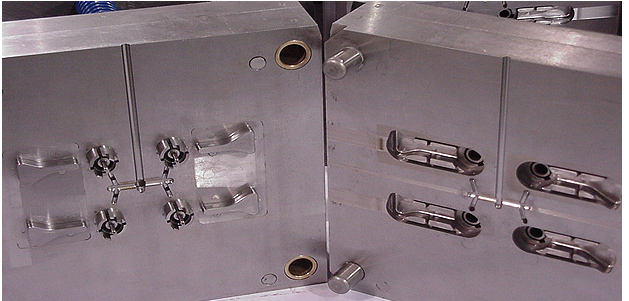
The mould consists of two primary components, the injection mould (A plate) and the ejector mould (B plate). Plastic resin enters the mould through a sprue in the injection mould, the sprue bushing is to seal tightly against the nozzle of the injection barrel of the moulding machine and to allow molten plastic to flow from the barrel into the mould, also known as cavity. The sprue bushing directs the molten plastic to the cavity images through channels that are machined into the faces of the A and B plates. These channels allow plastic to run along them, so they are referred to as runners. The molten plastic flows through the runner and enters one or more specialized gates and into the cavity geometry to form the desired part.
Traditionally, moulds have been expensive to manufacture. They were usually only used in mass production where thousands of parts were being produced. Moulds are typically constructed from hardened steel, pre-hardened steel, aluminium, and/or beryllium-copper alloy. The choice of material to build a mould from is primarily one of economics, steel moulds generally cost more to construct, but their longer lifespan will offset the higher initial cost over a higher number of parts made before wearing out. Pre-hardened steel moulds are less wear resistant and are used for lower volume requirements or larger components. The steel hardness is typically 38-45 on the Rockwell-C scale. Hardened steel moulds are heat treated after machining. These are by far the superior in terms of wear resistance and lifespan. Typical hardness ranges between 50 and 60 Rockwell-C (HRC). Aluminium moulds can cost substantially less, and when designed and machined with modern computerized equipment, can be economical for moulding tens or even hundreds of thousands of parts. Beryllium copper is used in areas of the mould which require fast heat removal or areas that see the most shear heat generated. The moulds can be manufactured by either CNC machining or by using Electrical Discharge Machining processes.
For further information on Mould Making services please email us at: info@dnasourcing.ca

